Rail, Road or Water: Choosing a Route by What You Want to Notice
Choose a rail, road or water route by the landscape you want to notice, with practical checks for connections, roadside details, and shorelines.
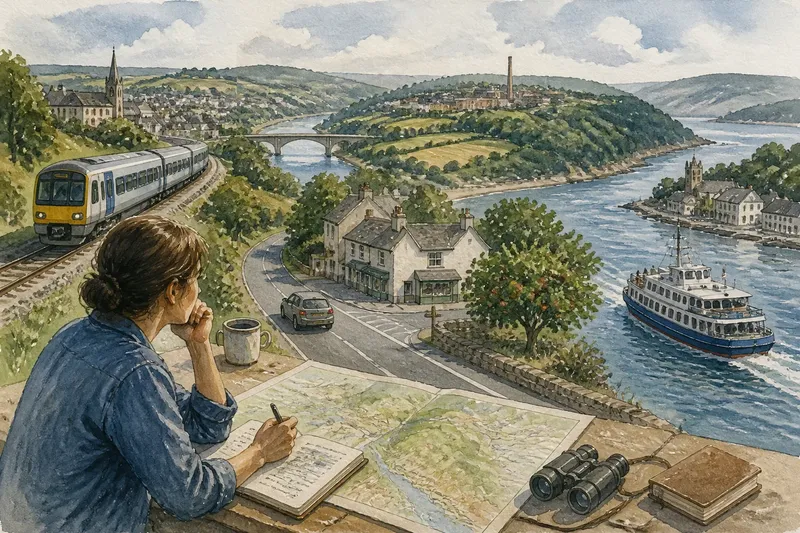
Rail, road, or water routes make different parts of a landscape easy to notice. A train frames a sequence of towns and fields; a road can bring a village shop or orchard within reach; a boat offers a view along a shore or river. Choose by the subject you want to observe, then check what the route actually lets you see and reach.
What does a train make easier to notice?
A train gives you a moving view in a clear sequence. Fields may give way to suburbs, then to hills or industrial edges. Since you are not steering, you can watch without deciding where to turn or stop.
The railway line also shows how places connect. Check a map for stations near town centers, river crossings, and changes in terrain. A line may pass through a region without revealing every nearby settlement, and tunnels or cuttings can interrupt the view.
Rail can suit a journey where you want to notice transitions and arrive ready to explore on foot. Treat the window as one perspective, not a complete portrait of the area.
What details come into view from the road?
A road route can bring you near a roadside orchard, a row of cottages, or a village shop beside a junction. You can choose a local road that follows a valley or stop at a signed viewpoint, if the route and conditions allow.
Driving demands attention, so the driver should not study the view or handle a map while moving. A passenger can watch the landscape and keep notes. If you are driving alone, pull into a safe, permitted stopping place before looking closely or recording anything.
Road travel suits landscapes whose details are scattered between destinations. It may be less suited to uninterrupted observation, since traffic, navigation, and route choices can draw your attention away. Ask whether the places between your named stops are part of the interest or simply a way to get there.
How does water change the view?
From a ferry or passenger boat, the shore becomes a long edge rather than a series of roadside stops. You can look for the shape of a harbor, a river mouth, working waterfronts, or buildings gathered around a landing.
A vessel follows its available route, and its landing point may be some distance from the streets you want to explore. Check where it leaves you, how you can continue, and whether the crossing is the subject of the journey or just a connection.
Choose water if you want to watch a shoreline unfold and are comfortable seeing some places from a distance. Wind, glare, and weather can affect visibility and comfort, so check operator guidance and consider whether a sheltered viewing area suits you.
Which mode fits the landscape you want to read?
Start with the feature you want to notice. A rail line may help you follow a change from city to farmland. A road may bring dispersed settlements or roadside land use closer. A boat may make the shape of a coast or river corridor easier to follow.
Then consider how you want to pay attention. A train can leave you free to sketch or watch from a window. A passenger in a car can observe while the driver concentrates on the road. A boat offers a broader view, though its route and landing places are fixed by the service.
Say you want to notice how a river shapes the towns along it. Your starting point is a map showing a rail line near the river, a road with access to a riverside viewpoint, and a passenger boat that follows part of the channel. If your main question is how towns connect to bridges and stations, choose the train and watch where those links appear; the tradeoff is that the river may be hidden for parts of the ride. If you want to follow the bends and banks, choose the boat, then check whether its landing works for your onward plans. If you want to stop at a particular overlook, choose the road, but plan that stop before driving. The result is a mode chosen for a specific observation, with its limitation visible before you set out.
What should you check before choosing a route?
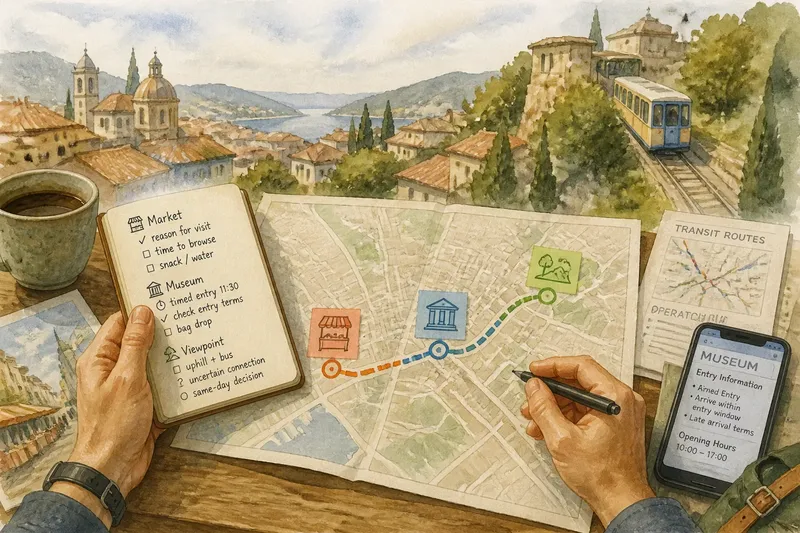
- View direction: Check a route map or description for which side faces the landscape you care about. If the route turns often or the viewing side is unclear, do not base the plan on one window; choose a viewpoint or walking stop instead.
- Stops and access: Locate stations, parking areas, or docks in relation to the places you want to see. If onward access is clear, keep that mode; if it is not, choose another connection or add a suitable walk.
- Who can watch: Decide whether you will drive or travel as a passenger. If you are driving, observe only while safely stopped; if you are a passenger, keep notes without distracting the driver.
- Visibility: Check for tunnels, dense development, glare, or exposure to weather along the route. If the view is likely to be intermittent, bring a map or field notebook; if conditions make outdoor viewing uncomfortable, favor a sheltered option.
- Arrival point: Check where the service ends and how that point relates to your intended walk or next connection. If it leaves you well short of the place you want to explore, plan onward transport or choose a route with more useful access.
- Comfort and access: Review the operator’s information for seating, shelter, and relevant accessibility details. If the available arrangements do not suit your needs, contact the operator or select another service before committing.
Which questions help settle the choice?
Is rail or road better for watching small towns?
Rail can show how towns connect along a corridor and where stations meet settled areas. Road travel can bring you closer to individual streets or roadside businesses, if you have a safe place to stop.
Can a ferry be part of a scenic route?
Yes, if the crossing itself gives you a view of a coast, harbor, or river that interests you. Check the landing point and onward connection so the water segment fits the rest of the route.
How do I choose if I want both a wide view and close details?
Choose the mode that best shows your main interest, then plan a walk or local connection for the other scale. A train journey followed by a town walk, for example, can pair a broad landscape sequence with street-level details.
What if the route’s view is unpredictable?
Choose a mode for how it connects places, not for a particular sightline. A map, a flexible seat choice where available, and attention to stations, riverbanks, or roadside edges can help you follow the journey even when views change.
For a thoughtful journey, choose the route that makes your subject easiest to notice, then check access and safety before you go. Rail can clarify connections, road travel can bring details within reach, and water can show a continuous edge. Keep a map handy, and leave room to change your focus when the landscape offers something unexpected.