The Shape of a Good Travel Day: One Anchor, Open Edges
Plan a travel day around one fixed anchor, then use a simple route-and-energy check to choose nearby stops without turning every idea into an appointment.
A good travel day needs a clear route, not a row of appointments. Choose one place or experience that gives the day direction, then use the surrounding streets, transit links and your own energy to decide what fits next.
This approach is different from keeping a list of optional attractions and trying to fit them around a fixed booking. The route itself becomes the plan: where you start, which area you explore, and how you can leave if the day changes. A paper map or Google Maps can help you see those connections without turning every pin into a promise.
How do you shape a travel day around a route?
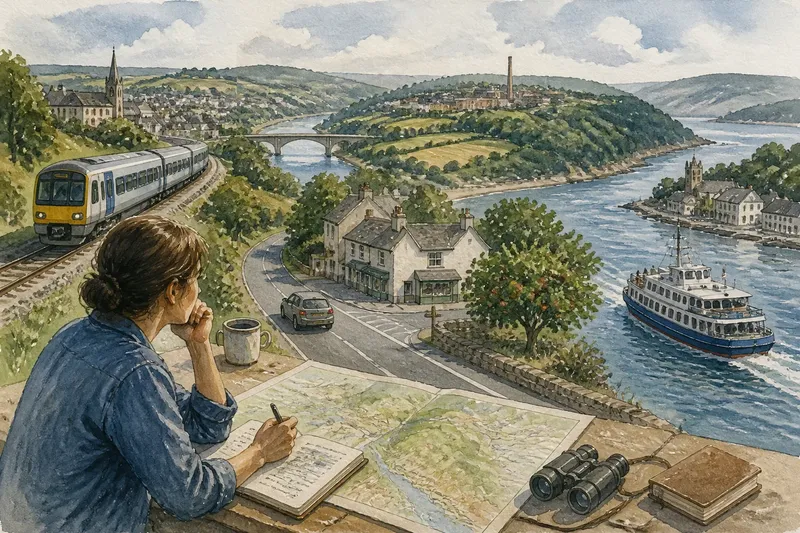
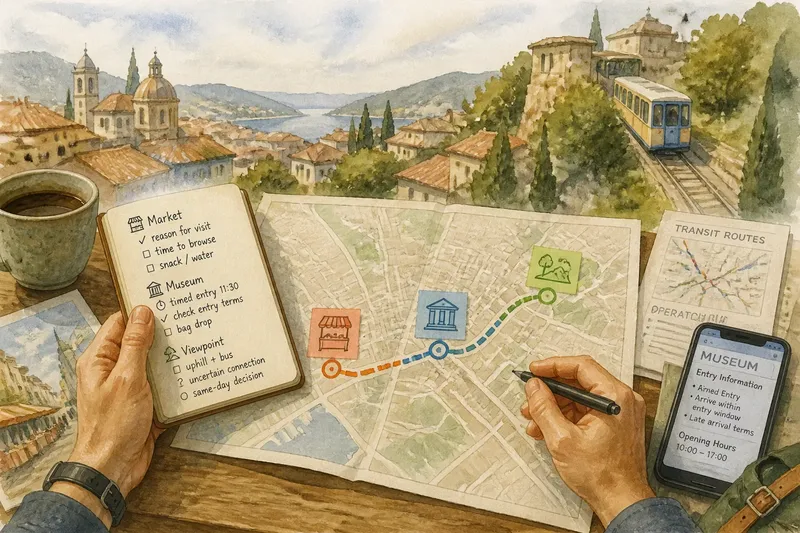
Begin with one place you genuinely want to experience, such as a neighborhood market, a museum or a stretch of waterfront. Mark your starting point and a practical way to reach it. Then look at what lies along the route and in the same area, rather than collecting distant stops.
Use three simple questions to filter possibilities:
- Is it on the way? If the place sits along your route, consider stopping; if reaching it requires crossing town, save it for another day.
- Does it suit the day’s purpose? If you want a quiet walk, choose a garden or riverside path; if you want local activity, look toward a market or busy square.
- Can you leave easily? If a nearby bus stop or direct walk back gives you an easy exit, keep the option; if leaving would be awkward, check your energy before committing.
- Is it open and accessible? If the venue’s official site confirms the hours and entry details, include it as a possibility; if details are unclear, choose an outdoor alternative or verify before setting out.
- Does it add something distinct? If it offers a different view of the area, keep it on your short list; if it duplicates the main visit, drop it and enjoy more time where you are.
- Would you still want it if the day feels tiring? If the answer is yes, it may be worth keeping nearby; if not, leave it off the route and make rest the easier choice.
These checks give each idea a clear place in the day. They also make it easier to remove a stop without feeling that the whole plan has failed.
What should you check before choosing a route?
Look at the start and finish, not just the attractions. A route that appears close on a map may involve a steep hill, a busy road or a transit transfer that changes how it feels. Check the map’s walking directions, identify a clear return option, and confirm opening details with the venue or transport operator when they matter.
Keep the route in one general area when you can. Neighborhood streets often offer places to sit, small shops and cafés along the way; a plan that jumps between districts can leave little room to respond to what you find. If rain or heat is likely, note a sheltered stop or indoor place that can serve as a pause.
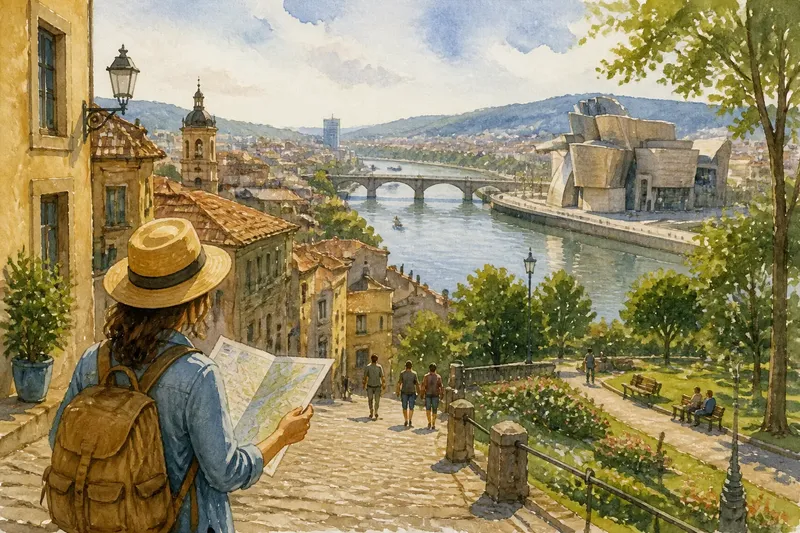
Say you are starting at a hotel near a central train station and want to visit a riverside museum. You check Google Maps and see a direct walking route through the old town, with a public garden beside the museum and a tram stop nearby. You choose the museum as the main destination, walk through the old town, and decide at the garden whether to continue or sit for a while. If you feel tired, the tram gives you a straightforward way back; if you feel good, you can explore the riverside before returning. The resulting plan has a clear direction and an easy choice point, without requiring a reservation for every part of the day.
How can a route adapt to your energy and the weather?
Walking, heat, unfamiliar streets and crowded rooms all take attention. Before leaving, note one comfortable place to pause and one simple way back to your lodging or transit hub. Treat both as options, not obligations.
If your energy drops, shorten the route rather than rushing through it. If a shower begins, move toward the covered market, café or museum you already identified. If the weather stays pleasant, keep walking only while the route still feels comfortable. This keeps decisions grounded in what is happening, instead of in what you hoped to do earlier.
A phone map is useful for checking a turn or finding a stop. A paper map can make the broader shape of a neighborhood easier to see. Use whichever helps you stay oriented; you do not need to keep adding destinations as you go.
What should you do when a route stops working?
First, identify the obstacle. A closed entrance, missed connection or sudden downpour calls for a different response than simple tiredness. Check the venue or operator’s current information if access or service is uncertain, then choose the smallest adjustment that makes the rest of the day workable.
- If a site is closed, check its official information; if it cannot be visited, stay in the same area and choose an open nearby place.
- If a transit connection is missed, check the next service; if the wait feels too long, use a direct walking route or return option you have already identified.
- If rain makes the walk unpleasant, head to your sheltered stop; if no suitable place is nearby, shorten the outing and return.
- If you feel tired, remove the farthest remaining stop; if resting nearby feels better, sit down before deciding whether to continue.
Do not try to recover every omitted stop by speeding up. A route is useful because it can change direction while still making sense.
What do travelers ask about planning a route?
How many places should I include on a travel route?
Choose one main destination and a short list of nearby possibilities. Keep each extra place only if it fits the area and adds a distinct experience; otherwise, leave it for another day.
Should I plan a route on foot or by transit?
Use walking directions when the route feels comfortable and the places are close enough to connect naturally. Choose transit when distance, hills, weather or access make walking impractical, and check service information with the operator.
What belongs in a travel route note?
Write down your starting point, main destination, practical way to get there, a pause option and a return route. Add opening or ticket details only where they affect access.
How do I keep a route flexible when traveling with someone?
Agree on the main destination and the broad area, then decide together at natural stopping points whether to continue. Say clearly which places are ideas rather than commitments so neither person has to guess.
What is a useful travel route to carry?
Keep a small note with the day’s main destination, the route to reach it, one place to pause and an easy return option. Add nearby possibilities only when they pass the route checks. That note gives you enough orientation to move through a place without deciding every stop in advance.
For a travel day shaped by a route, the most useful detail is often the exit: knowing how to pause or head back makes it easier to stay curious while you explore. Let the map provide direction, then let the place and your energy guide the next turn.